

Clear Filters



Repository of Tools
EDMO Belux collected the existing material from Belgium and Luxembourg, submitted it to a feedback panel and selected the most suitable educational tools.
Educational package
Lesson idea
Lesson idea
The website provides different resources to tell the difference between right and wrong on the internet. This is a course that offers work on image and press articles.
Available in French
Children (7-12 years)

Lesson idea
This is a course that offers benchmarks and tools for media education. The course proposes to start from the question of animals, real or fictitious to question the notion of fake news.
Available in French
Children (7-12 years)

Poster
Manual
Manual
The “Fake news: art, fiction, lie” exhibition is a complete pedagogical material that includes a multidisciplinary accompanying file, a digital version, a traveling version. A CLEMI (France) tool.
Available in French
Children (7-12 years), Youngsters (13-18 years)

Video
A playlist of educational videos to understand key media concepts. A playlist proposed by CLEMI (France).
Available in French
Children (7-12 years), Youngsters (13-18 years)

Video
This interactive video presents six questions to help you understand the message of video creators. Using these questions (what, (for) whom, where, when and why), you will learn to stop and think when watching videos.
Available in Dutch
Children (7-12 years), Youngsters (13-18 years)

Lesson idea
Many pupils report that they barely, if ever, follow the news. But is that perception correct? Have your pupils keep a news diary and find out together!
Available in Dutch
Children (7-12 years), Youngsters (13-18 years)

Educational package
The EDUbox Fake News provides tips and background information to debunk fake news. As a real fake news detective, you will learn to distinguish fake news from other types of news.
Available in Dutch, English
Youngsters (13-18 years)

Educational package
These days, we are exposed to an overload of information and messages. Unfortunately, these messages often include propaganda. Mind over Media offers several tools to teach pupils how to deal with propaganda, stimulate their critical thinking and deepen their sense of social responsibility.
Available in Croatian, Czech, Dutch, English, Finnish, French, Polish, Portuguese, Romanian, Russian, Swedish
Youngsters (13-18 years)

Website
Made-up messages, deepfakes and statistics that don't make sense. More and more, we doubt what is true and what’s not. This website shows how fake news works, why we so often believe it and how you can check the reliability of messages yourself.
Available in Dutch
Youngsters (13-18 years), Adults (18+)

Lesson idea
With news available so quickly and everywhere (online), some wonder if it is still reliable. Are certain sources more reliable than others? Which news sources should you avoid when looking for objective information? And how exactly do you check what is reliable and what is not?
Available in Dutch
Children (7-12 years), Youngsters (13-18 years)

Game
The Bad News Junior game is designed to introduce children to fake news in a playful way. Take on the role of a fake news master and try to gather as many followers as possible!
Available in Dutch, English
Children (7-12 years)

Lesson idea
This pedagogical folder is about misinformation: what exactly is it? How to differentiate the true information from the false? A file from BeeSecure (Luxembourg).
Available in French
Adults (18+)

Manual
This pedagogical folder addresses the subject of disinformation in politics, in particular that of its potential influence on the behavior of the population during elections.
Available in French
Adults (18+)

Manual
This folder discusses fake news in the media, amplified by the acceleration of the information cycle, and the risks for press freedom.
Available in French
Adults (18+)

Video
Info ou Mytho? is the critical thinking channel for teenagers… and older children: cognitive biases, conspiracy theories, media and information literacy, consequences of fake news in the news, interviews with youtubers fighting misinformation, etc.
Available in French
Youngsters (13-18 years)

Manual
This issue of the “Repères” Collection of the Higher Council for Media Education is devoted to disinformation.
Available in French
Adults (18+)

Website
Discover the resources produced by the Rumor Detector of Agence Science-Presse through these fun thematic tours! It is a website platform that includes mini-learning paths on issues related to disinformation.
Available in French
Youngsters (13-18 years), Adults (18+)

Poster
Lesson idea
Lesson idea
How to approach the question of fake news in philosophy and citizenship? This issue offers sequences and a poster on the issue. The sequence aims to lead a group reflection on the notion of fake news and more broadly of true, false, hoax, lie...
Available in French
Children (7-12 years), Youngsters (13-18 years)

Educational package
A course of critical analysis of the image proposed by the association C-Page (Collective for the Promotion and Animation Youth Childhood).
Available in French
Youngsters (13-18 years)

Lesson idea
Exercising critical thinking in the face of online information is a major challenge in the face of which some 3rd degree teachers may feel helpless. A tool offered by “Action Médias Jeunes” (Belgian association).
Available in French
Youngsters (13-18 years)
Manual
Decodex is a tool initiated by the french newspaper "Le Monde". These are benchmarks on the information circuit and how to differentiate information from the rest of the content circulating on social networks.
Available in French
Youngsters (13-18 years)
Poster
Manual
Manual
The “Fake news: art, fiction, lie” exhibition is a complete pedagogical material that includes a multidisciplinary accompanying file, a digital version, a traveling version. A CLEMI (France) tool.
Available in French
Children (7-12 years), Youngsters (13-18 years)
Video
A playlist of educational videos to understand key media concepts. A playlist proposed by CLEMI (France).
Available in French
Children (7-12 years), Youngsters (13-18 years)

Video
Discover a video clip that asks the deliberately provocative question: are we being manipulated by the media?
Available in Dutch, English, French
Youngsters (13-18 years), Adults (18+)

Lesson idea
Two educational sheets to work on the issue of information traitment and filtering and the notion of the news feed.
Available in Dutch, English, French
Youngsters (13-18 years)

Video
Website
Website
How to tackle conspiracy theories? What generalities can be taught about conspiracy theories. Discover 14 video capsules to educate about conspiracy theories.
Available in English, French
Youngsters (13-18 years), Adults (18+)

Poster
The Internet offers a lot of information. But how do you know which information is reliable and which is not? These 10 questions will help you to distinguish fiction from fact.
Available in Dutch, English, French, Greek, Turkish
Children (7-12 years), Youngsters (13-18 years)

Educational package
It is impossible to shield children from fake news. But we can teach them to think critically about the information coming at them. Criticat teaches third grade elementary school children how to think critically.
Available in Dutch, English
Children (7-12 years)

Poster
Educational package
Educational package
How do you tackle propaganda, conspiracy theories and misleading information? In this educational package, youngsters discover what critical questions to ask to recognise propaganda and conspiracy theories.
Available in Dutch, English, French
Youngsters (13-18 years)

Educational package
Youngsters come into contact with news, and therefore fake news, through various channels. How do you encourage them to look critically at (fake) news? How can they figure out what is real and what is not? Find out in this educational package!
Available in Dutch
Youngsters (13-18 years)
Poster
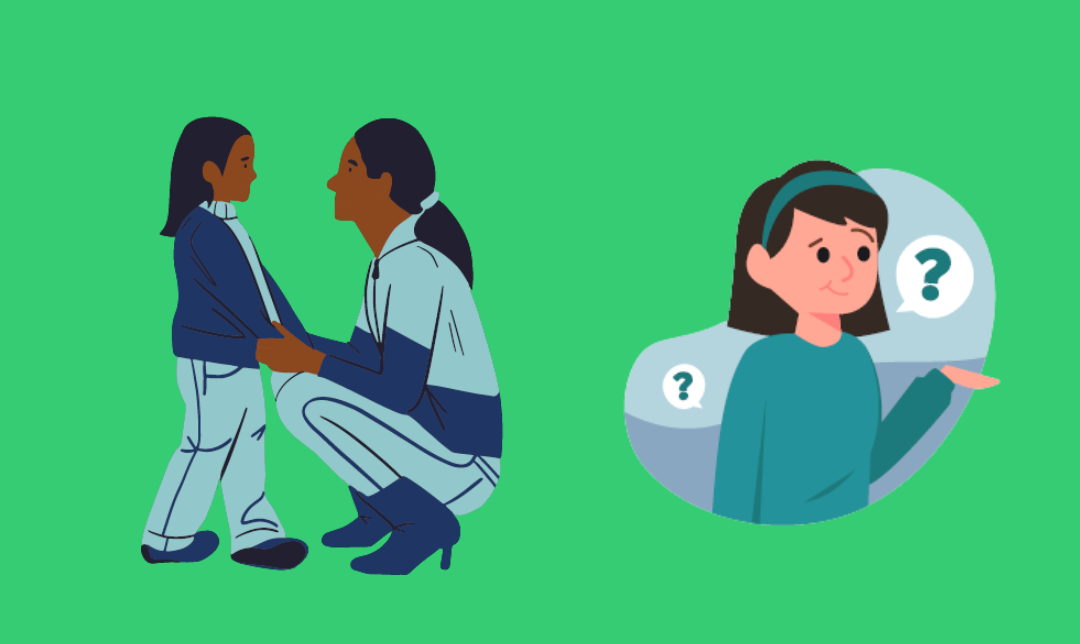
As a parent, how do you engage in a conversation with your child about fake news? This poster gives tips for a good conversation.
Available in Dutch
Adults (18+)
Educational package
The EDUbox Fake News provides tips and background information to debunk fake news. As a real fake news detective, you will learn to distinguish fake news from other types of news.
Available in Dutch, English
Youngsters (13-18 years)
Educational package
These days, we are exposed to an overload of information and messages. Unfortunately, these messages often include propaganda. Mind over Media offers several tools to teach pupils how to deal with propaganda, stimulate their critical thinking and deepen their sense of social responsibility.
Available in Croatian, Czech, Dutch, English, Finnish, French, Polish, Portuguese, Romanian, Russian, Swedish
Youngsters (13-18 years)
Website
Made-up messages, deepfakes and statistics that don't make sense. More and more, we doubt what is true and what’s not. This website shows how fake news works, why we so often believe it and how you can check the reliability of messages yourself.
Available in Dutch
Youngsters (13-18 years), Adults (18+)
Lesson idea
With news available so quickly and everywhere (online), some wonder if it is still reliable. Are certain sources more reliable than others? Which news sources should you avoid when looking for objective information? And how exactly do you check what is reliable and what is not?
Available in Dutch
Children (7-12 years), Youngsters (13-18 years)
Game
The Bad News Junior game is designed to introduce children to fake news in a playful way. Take on the role of a fake news master and try to gather as many followers as possible!
Available in Dutch, English
Children (7-12 years)
Manual
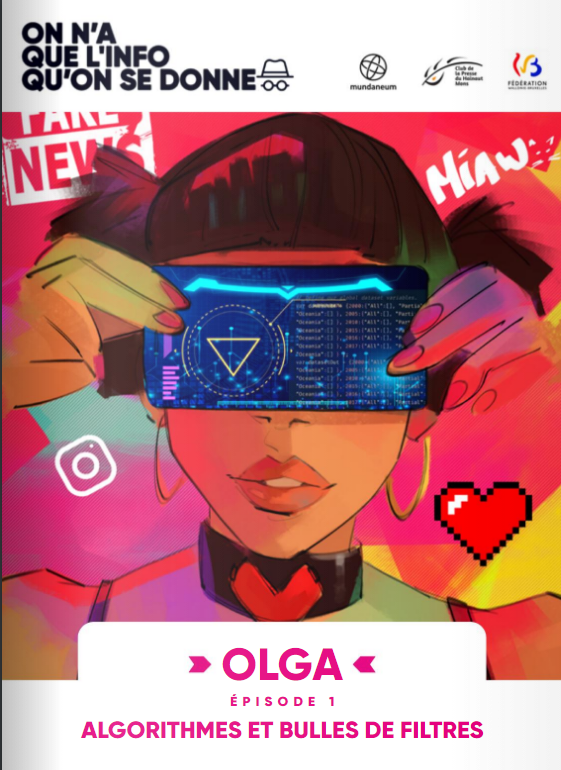
The “We only have the info we give ourselves” project is a project that offers various educational media literacy files: algorithms, conspiracy theories, media and citizens. The issue on algorithms and filter bubbles provides tools for adults to broach these subjects with the youngest. A Mundaneum project.
Available in French
Adults (18+)

Educational package
A tool offered by Brass – Center Culturel de Forest
Available in French
Children (7-12 years), Youngsters (13-18 years)
Video
Website
Website
How to tackle conspiracy theories? What generalities can be taught about conspiracy theories. Discover 14 video capsules to educate about conspiracy theories.
Available in English, French
Youngsters (13-18 years), Adults (18+)

Educational package
On some issues, tensions run high. It then seems like you only have a camp 'for' and a camp 'against'. As a teacher, you might avoid such (polarising) topics because they are too sensitive. With the EDUbox: US-versus-Them Thinking, pupils practise dealing with disagreements in the classroom.
Available in Dutch, English, French
Youngsters (13-18 years), Adults (18+)
Educational package
It is impossible to shield children from fake news. But we can teach them to think critically about the information coming at them. Criticat teaches third grade elementary school children how to think critically.
Available in Dutch, English
Children (7-12 years)

Game
Movie
Movie
The Club of Ugly Children is a film (with accompanying game) in which Paul, one of the ugly children in danger of being locked up, takes on dictator Isimo. Introduce your pupils to what it is like to live in a dictatorship (where fake news is everywhere), and how to fight it.
Available in Dutch
Children (7-12 years)